Reveal
Potential
Reach the heights of trading with us! We offer a wide range of trading accounts suitable for traders of all levels.
Get Started
First steps
How to Start Earning
1step
Think
Consider several ways to earn money on the exchange. Assess their advantages and disadvantages. Choose among them the most suitable for you.
2step
Choose
Find several tools on our platform for investing and choose among them the most suitable one. Register and open a minimum deposit.
3step
Earn and Learn
Try different approaches, learn from your actions, gain experience. Analyze your steps, work on your mistakes, improve your skills and strategies.
Features
Open a World of New Financial Opportunities
Investments
Explore a wide range of trading instruments, carefully selected for their high liquidity, allowing you to make optimal investment decisions.


Analytics
Gain access to exclusive market research empowering you to learn how to predict chart movements alongside our team of traders.


VIP Club
Join an international community of traders and unlock privileges that are typically unavailable to the majority of market participants.


Safety
The real-time margin calculation system reflects the market revaluation of all client positions, ensuring an accurate risk.


Explore a variety of options and trade with confidence, taking advantage of global market trends and making informed investment decisions.

Custom reports
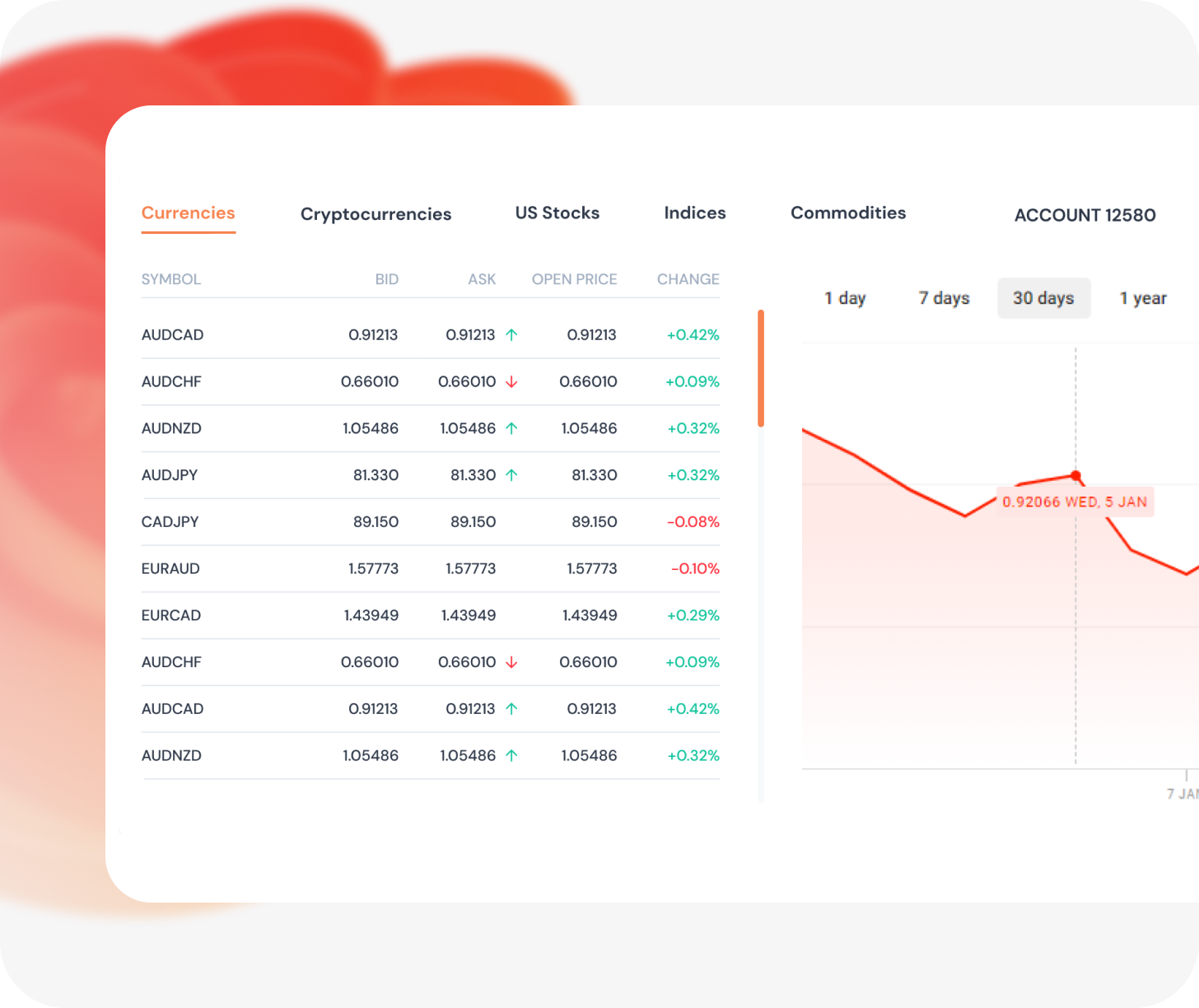
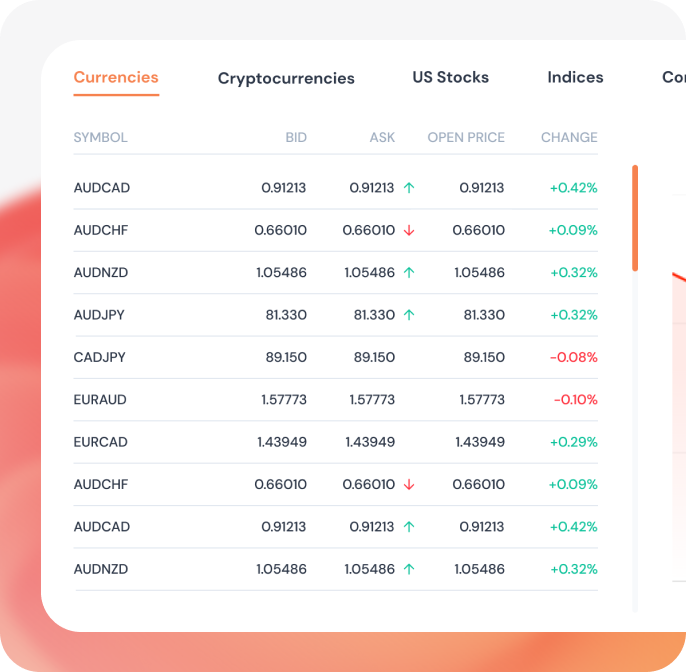
Personalized Reports Customized for Your Needs
Every trader has unique requirements for analyzing and monitoring their trading activity. That's why our company provides customized reports specifically tailored to each client's needs. Our team of professionals works closely with traders to create personalized reports that highlight performance metrics, market analysis or visualization of specific data.
Personalized support
Comprehensive Support Service for Every Trader
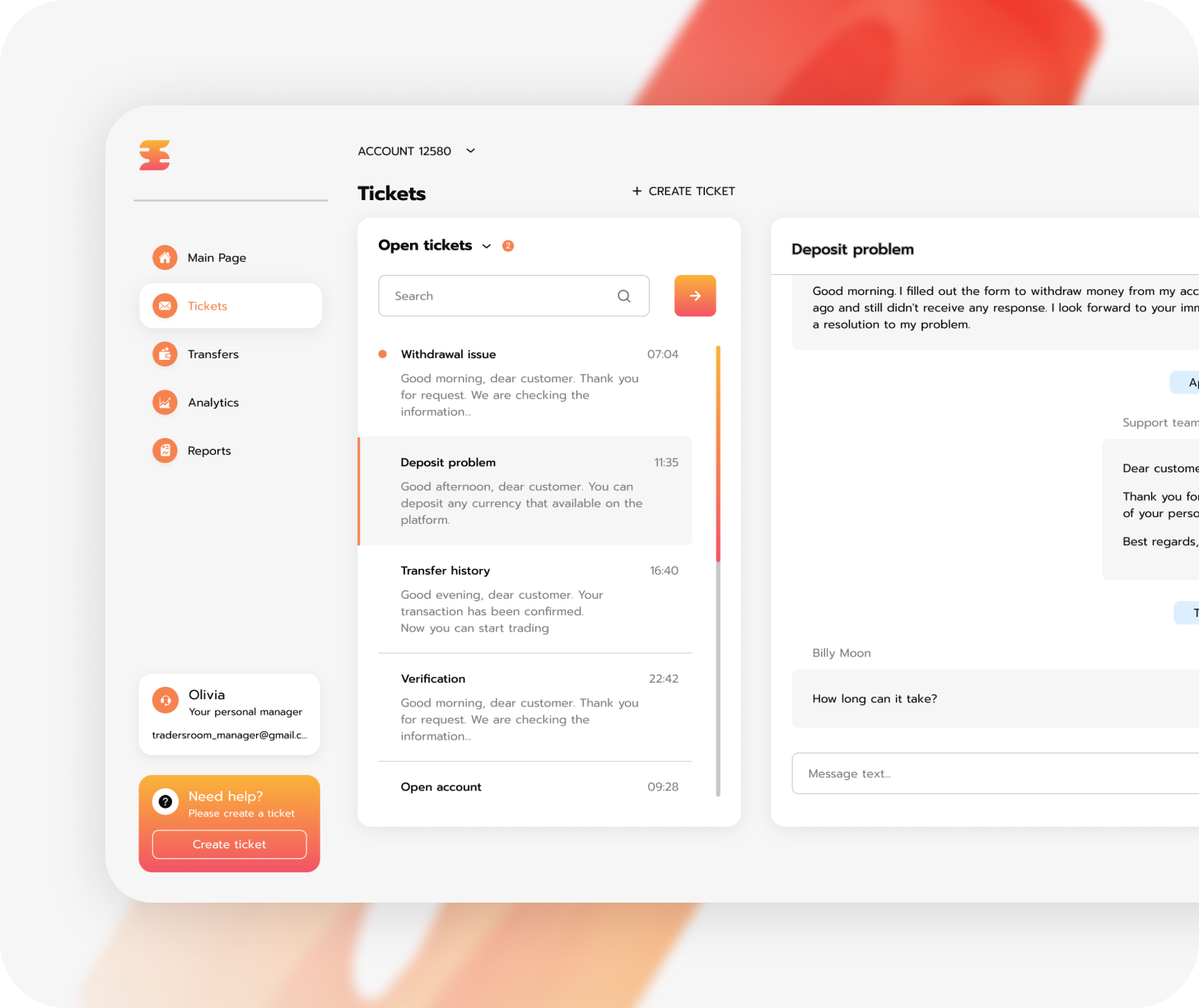
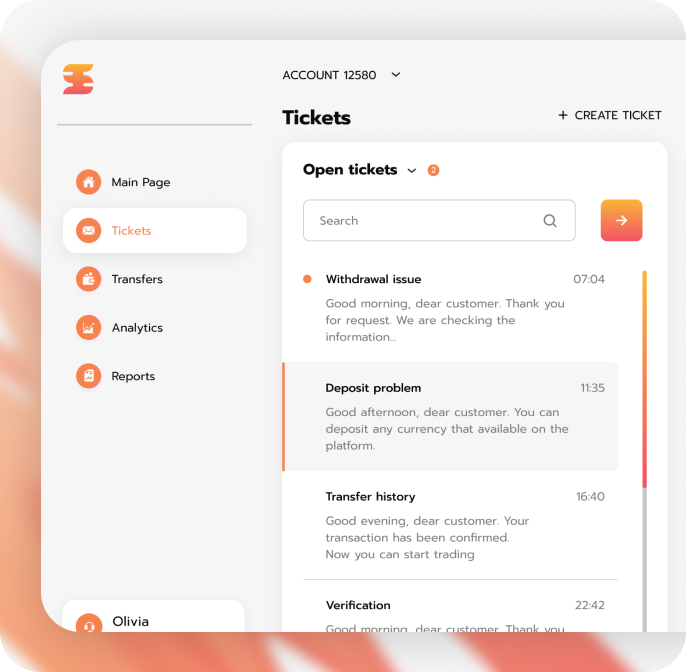
Our company prioritizes effective communication with clients, providing a professional support service to address all financial inquiries related to trading. Our team of experts is always available to assist with any questions and ensure seamless trading experiences.

News
Stay Up to Date With the Trends and Happenings

15.06.2026
Bitcoin at $66K as US-Iran Deal Revives Risk Appetite
Crypto Market Capitalization and the Influence of Geopolitical Developments
The recent surge in the crypto market capitalization, rising by 1.8% to reach $2.24 trillion, has been notably influenced by geopolitical events, specifically a preliminary agreement between the US and Iran aimed at ending ongoing conflicts. This development has notably increased risk appetite among investors, pushing the crypto market towards the upper boundary of the established upward trading channel, which has been in place since June 6.
Technical Analysis and Market Sentiment
From a technical perspective, cryptocurrencies have found solid support after touching the 200-week moving average. This is a strong indicator that the long-term positive outlook for the market remains intact. However, the short-term analysis presents a different picture, suggesting that the current market recovery up to $2.30 trillion might merely be a corrective bounce following the downturn observed since the highs achieved in May. This scenario underlines the importance of distinguishing between short-term corrections and long-term trends.
Bitcoin's Current Trading Landscape
Bitcoin, the market leader, is currently trading near the $66,000 mark, reflecting a 2.4% increase over the past 24 hours. This recovery positions it near the lows experienced in February-April, offering a critical test for bullish market participants. Should the recovery stall at these levels, it could indicate that the rebound is nearing its end, potentially leading to further price declines. Conversely, if the previous support does not reverse into a resistance, it could significantly bolster bullish sentiment and catalyze further price increases in the days ahead.
Market Dynamics and Investor Sentiments
The latest data from SoSoValue reveals an interesting development: net weekly outflows from spot Bitcoin ETFs have decreased to $316 million, down from a previous record high. This change signifies a glimmer of renewed investor interest, as evidenced by the first inflow recorded after nearly a month of consistent outflows. However, JPMorgan notes a decline in investors' use of Bitcoin and gold as traditional hedges against the depreciation of fiat currencies, indicating a shift in investment strategies.
Bitcoin's Correction Phase and Market Cycle Indicators
According to Glassnode, Bitcoin appears to be in a late-stage correction phase. Many recent buyers are experiencing losses, and overall demand remains weak, not aligning with levels typically seen at the formation of a long-term market bottom. Galaxy Research's analysis supports this, with only four out of 13 key indicators suggesting a market bottom. They predict possible price declines, potentially reaching the $40,000 to $46,000 range.
Cost of Mining and Long-Term Investment Prospects
Currently, Bitcoin's trading price aligns closely with its mining cost of approximately $61,200, where electricity comprises around $49,000 of these costs. Capriole Investments suggests that a long-term market bottom may form near this cost level. Standard Chartered concurs, asserting that Bitcoin has already established a cycle bottom just above $59,000 and that the market is setting the stage for a new growth phase, offering attractive entry points for long-term investors.
Recent Adjustments in Bitcoin Mining Difficulty
A significant adjustment in Bitcoin's mining difficulty has taken place, with a decrease of 10.09% to 124.93 T. This marks the largest decline in this metric since early February, underscoring the impact of external factors, such as adverse weather conditions, on the mining environment. This adjustment reflects the dynamic nature of the crypto ecosystem and its susceptibility to both internal and external influences.
Conclusion
The current crypto market scenario presents a complex interplay of technical, geopolitical, and investor sentiment factors. While the long-term outlook remains positive, the short-term corrections warrant cautious consideration. As always, it is crucial for investors to stay informed and adaptable, responding to the evolving market conditions with a strategic balance of risk and opportunity.

12.06.2026
Futu founder Leaf Li accelerates global expansion after $273M penalty
Futu Holdings' Global Ambitions amid Regulatory Challenges
China's securities regulator has targeted Futu Holdings with a substantial fine for unlicensed trading activities. Yet, what might seem like a significant setback is part of a pre-existing strategic pivot by the company towards international markets. This ambitious strategy aims to dilute reliance on Futu's home market and reduce exposure to China's stringent regulatory environment, showcasing the foresight of founder Leaf Hua Li.
The Regulatory Clampdown
On May 22, the China Securities Regulatory Commission (CSRC), along with its Shenzhen bureau, proposed a hefty administrative penalty amounting to around $271-$273 million. These charges stem from allegations that Futu was engaging in unlicensed securities and futures business activities targeting clients from mainland China. Additionally, Leaf Hua Li, the company's founder, was hit with a personal fine of RMB 1.25 million. This significant blow, however, is being met with a robust international strategy which was already in progress.
Navigating Through Numbers
Futu's strategic pivot is reinforced by compelling financial data. Today, mainland Chinese clients constitute a mere 13% of the company's total funded accounts. Conversely, international clients, served primarily through the Moomoo brand, now represent over 55% of Futu's client base. The company’s Q1 2026 financial metrics emphasize growth and resilience despite regulatory scrutiny. With a substantial revenue of $746.9 million, marking a 25% increase year-over-year, and a remarkable rise in total client assets to $155.8 billion, the company is clearly reaping the benefits of its international expansion.
Expansion into Cryptocurrency
Futu's global expansion strategy isn’t confined to traditional securities. In a world growing increasingly digital, Futu has ventured into the realm of cryptocurrencies. Through its PantherTrade platform, the company is pioneering licensed virtual asset trading in Hong Kong, offering an innovative blend of cryptocurrency trading services combined with integrated securities financing options. This diversification aligns with global investment trends and sets Futu apart in a competitive financial landscape.
Market Dynamics and Investor Considerations
Unsurprisingly, Futu's stock experienced a tumultuous period following the penalty announcement, with variations ranging between an 8% and 37% drop. Similarly, Li's personal net worth witnessed a decline from its previous estimation of around $7.6 billion. Yet, when placed in broader financial context, the penalty equates to about a third of a single quarter's revenue. Given the company's robust financial health, represented by $155.8 billion in client assets, the penalty is a significant but not fatal blow.
Implications for the Broader Fintech Sector
Futu's experiences are a cautionary tale for other Chinese fintech companies operating in the realm of cross-border financial services. The CSRC’s stringent measures underscore a broader regulatory tendency towards heightened scrutiny on businesses that blur the line between domestic and international markets. As Futu demonstrates, strategic diversification and international market engagement could be both a buffer and a growth pathway for companies operating under similar pressures.
Conclusion: The Road Ahead for Futu Holdings
Futu Holdings stands as a compelling case study in turning regulatory challenges into opportunities for strategic expansion. Through diversification into international markets and innovative sectors like cryptocurrency, the company is not merely surviving but thriving. As the financial climate continues to evolve, Futu's experience offers valuable insights for other businesses navigating similar landscapes. Future vigilance and adaptability remain paramount as companies like Futu forge paths toward sustainable growth and global financial success.

10.06.2026
AI, digital assets and the end of legacy compliance
The Transformation of Compliance in Global Banking
Compliance has transitioned from a peripheral function within the back office to a central component in the boardroom strategy for global banks. It has evolved from a quiet operational component to a dynamic and influential element that shapes how financial institutions handle growth, adopt new technologies, regulate employee behavior, and meet increasing regulatory demands across various jurisdictions. This marked shift indicates the escalating importance of compliance in the modern banking sector and its impact on the overall strategic operations of banks.
Navigating the Complex Landscape of Global Risk and Regulation
According to insights from StarCompliance, the challenge facing global banks goes beyond the sheer volume of regulations. The entire operating landscape has become more interwoven, causing traditional compliance risk management structures to lag behind. StarCompliance recently highlighted three critical areas: global risk, the governance of artificial intelligence (AI), and regulatory pressure.
Financial institutions are currently managing several simultaneous challenges, including expectations surrounding AI governance, oversight of digital assets, meeting operational resilience requirements, enforcing sanctions, adjusting to evolving accountability frameworks, and navigating an intricate tapestry of regional regulations. The convergence of these pressures, arriving simultaneously rather than sequentially, presents diverse supervisory expectations unique to each market, creating an acute situation for banks to address.
The Challenge for Compliance Teams in Fostering Innovation
For compliance teams, this climate poses an ongoing balancing act. They are tasked with enabling innovation and facilitating business growth while demonstrating effective governance, maintaining defensible oversight, and achieving real-time risk visibility across the organization. These objectives must be met amid increasing complexity and regulatory scrutiny.
Transitioning from Traditional Compliance Models
Traditionally, many banking compliance programs were designed for more centralized and predictable regulatory environments. However, that model is now under strain. Financial institutions are processing larger data volumes, managing employee activities across numerous markets and digital platforms, and facing increasingly intricate reporting obligations. Simultaneously, regulators are emphasizing active demonstration of compliance controls versus merely having policies exist on paper.
This shift compels banks to fundamentally reassess their compliance infrastructure. Disconnected systems, fragmented reporting, and manual oversight processes introduce operational delays and leave institutions vulnerable when regulators request evidence, escalation histories, or audit trails at short notice. Consequently, compliance technology, governance, and data management are being reconsidered at an enterprise level.
The Role of Artificial Intelligence in Compliance
Artificial intelligence is accelerating this transition. Banks are increasingly exploring AI-driven surveillance, monitoring, and risk detection tools. However, this comes with heightened scrutiny from regulators regarding governance, accountability, explainability, and model oversight. For compliance leaders, the focus has shifted from debating AI deployment to determining responsible usage within existing regulatory frameworks.
Expanding the Risk Perimeter with Digital Assets and Employee Conduct
The intersection of traditional finance and digital assets represents another significant shift. Activities like cryptocurrency trading, tokenized assets, decentralized finance platforms, and prediction markets introduce new risks concerning employee conduct and information that existing surveillance programs were not originally designed to capture.
This is especially critical for global financial institutions, where escalating regulatory focus is on conflicts of interest, material non-public information, and employee trading activities that extend beyond traditional brokerage accounts. Compliance programs require visibility across more financial activities, necessitating technology that can adapt to evolving market structures.
Adapting to a Connected Compliance Approach
As regulatory complexity intensifies, many banks are gravitating towards more centralized and connected compliance operating models. The emphasis is shifting towards integrating governance, surveillance, employee disclosures, case management, reporting, and audit documentation into cohesive frameworks that can scale globally while accommodating regional regulatory demands.
StarCompliance has positioned itself at the forefront of this shift. For over 25 years, StarCompliance has collaborated with financial institutions worldwide to manage employee compliance, conflicts of interest, personal account dealings, gifts and hospitality oversight, political contributions, external business activities, and information barrier controls through connected compliance technology.
As banks continue to overhaul their compliance infrastructures, technology's role has become a fundamental operational necessity for managing risk consistently across jurisdictions. Rather than supporting function, technology has become integrally embedded within the compliance landscape, underscoring the evolution from traditional models to more dynamic, interconnected systems in global banking.

08.06.2026
Karachi to get Billion Dollar Saudi-Backed Crypto and Smart Port Hub
Karachi's Waterfront Transformation: A New Frontier for Innovation and Trade
Karachi, Pakistan's bustling financial epicenter, is on the cusp of a transformative development. A significant stretch of port-owned land is poised to evolve into a vibrant hub of innovation, digital finance, and global commerce, thanks to a groundbreaking partnership between Pakistani and Saudi investors. This ambitious initiative is set to not only revolutionize the city's skyline but also redefine how Karachi engages with the global economy.
The Dynamics of the Partnership: A Synergy of Vision
The collaboration involves key stakeholders, including Saudi investors joining forces with notable Pakistani partners. Together, they aim to explore the creation of a sprawling cryptocurrency and blockchain zone in the thriving port city. This development will be complemented by a digital banking hub, smart port infrastructure, luxury real estate projects, and major healthcare and education facilities.
Memorandum of Understanding: Paving the Way Forward
The foundation of this groundbreaking initiative was laid with the signing of a memorandum of understanding (MoU) involving the Karachi Port Trust (KPT), the Saudi Business Council-Najd Gateway Holding Company, Arif Habib Dolmen REIT Management Limited, and the Pakistan Corporate Consortium. The MoU sets the stage for a collaboration that promises to bring unprecedented growth and development to Karachi's waterfront.
Project Scope: A Vision for a New Coastal Landscape
The proposed development encompasses approximately 140 acres of prime KPT-owned land on Moulvi Tamizuddin Khan Road. The plan is to transform this site into a modern commercial and maritime district that can attract regional and international investors. This ambitious project signals South Asia's increasing efforts to regulate digital assets and cryptocurrency trading, positioning Karachi as a nexus for financial innovation.
Comprehensive Urban Development: Blending Commerce with Technology
Plans for the area include a marine technology and logistics zone, smart port integration systems, digital customs services, and maritime software development projects. These initiatives aim to modernize Pakistan's shipping and port operations. Broadly, the vision incorporates international-standard hospitals, a medical university, a maritime and trade law school, luxury hotels, skyscrapers, corporate headquarters, and a large convention center.
Strategic Developments and Economic Potential
This announcement aligns with a recent visit by a Saudi delegation to Pakistan, where discussions also included potential ventures like an oil refinery at Gwadar Port and strategic oil storage facilities. The Karachi waterfront project is designed to fulfill all legal and regulatory requirements, aiming to attract investment, stimulate economic activity, and support urban renewal along the city's coastline.
Positioning Karachi in the Global Digital Finance Arena
The proposed crypto-focused district comes at a pivotal time when global competition for digital finance and blockchain investment is intensifying. Proponents believe this project could position Pakistan as a regional destination for technology-driven capital, strengthening ties with Gulf investors and fostering economic synergy.
The Rise of South Asia's Largest Integrated Waterfront Development
Should plans progress beyond the proposal stage, Karachi could soon witness one of South Asia's largest integrated waterfront developments. This mega project aims to combine cryptocurrency, digital banking, smart ports, energy, education, healthcare, and luxury real estate into a cohesive and prosperous urban environment.
Want to Be a Part of a New Trading World?
Simply provide us with your email, and our manager will contact you to get started.